
Reykjanes Peninsula Itinerary: 1-Day Self-Drive Route with Brimketill
This guide contains affiliate links. If you book through them we may earn a commission at no extra cost to you. Learn more
The best Reykjanes Peninsula itinerary for one day is a loop from Reykjavík: Lake Kleifarvatn and the Seltún geothermal area in the morning, then Grindavík and the south-west coast – Brimketill, Gunnuhver, Reykjanesviti lighthouse and Valahnúkur – and finally the Bridge Between Continents before returning via Keflavík. That is roughly 7–9 hours including stops, with the Blue Lagoon as an optional evening soak. The coastal sights have no entrance fee and sit close to their car parks.
Below is the route stop by stop, with realistic timings, plus a shorter half-day version for arrival or departure days.
The route at a glance
| Stop | What you see | Time on site | Then drive |
|---|---|---|---|
| 1. Kleifarvatn | The peninsula’s largest lake, black-sand shores | 20–30 min | about 10 min |
| 2. Seltún (Krýsuvík) | Boiling mud pots, fumaroles, coloured clay | 30–45 min | about 30–40 min |
| 3. Grindavík | Fishing harbour, lunch, the recent lava edge | 45–60 min | about 10–15 min |
| 4. Brimketill | Sea-carved lava pool, crashing surf | 20–30 min | about 5 min |
| 5. Gunnuhver | Steaming mud pools, the ghost legend | 20–30 min | about 5 min |
| 6. Reykjanesviti & Valahnúkur | Lighthouse (1907–08), sea cliffs, view to Eldey | 30–45 min | about 10 min |
| 7. Bridge Between Continents | Footbridge across a rift between two plates | 15–20 min | about 20 min to KEF |
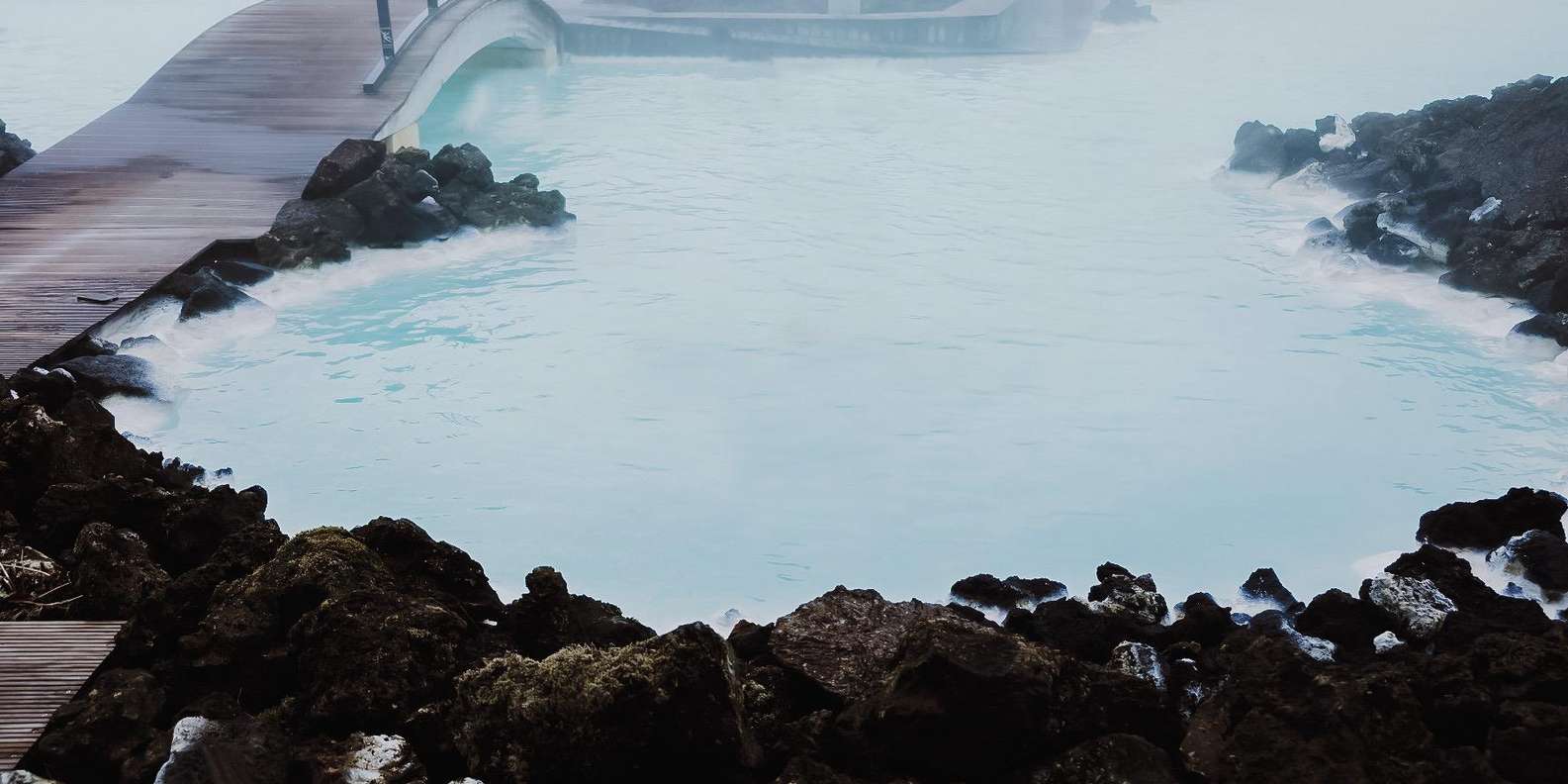
| Optional: Blue Lagoon | Geothermal soak | 2–3 h | about 45 min to Reykjavík |
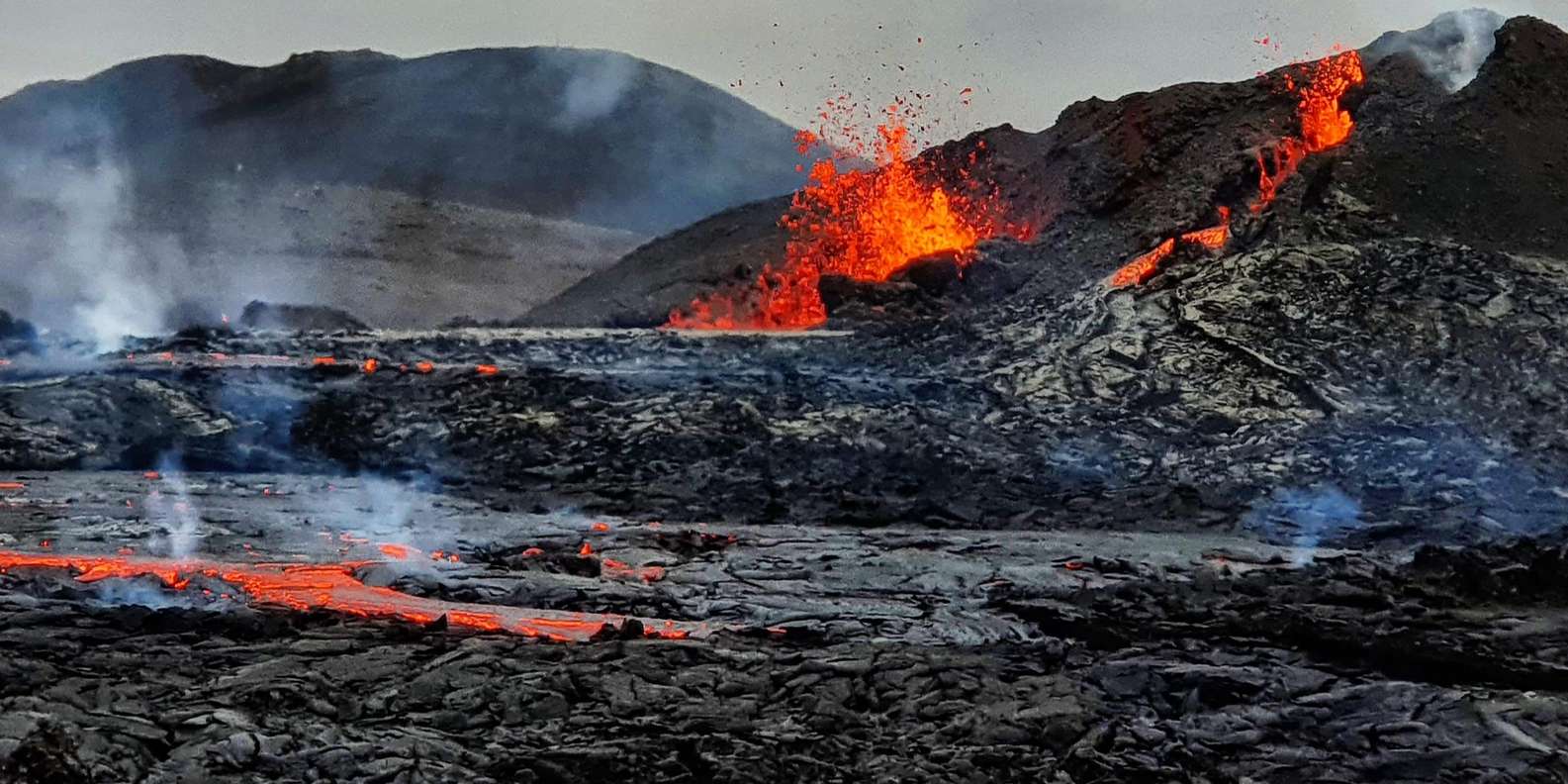
Driving times are rounded estimates for good conditions. Check road status on umferdin.is before you start – roads around Grindavík can close during volcanic activity (see our volcano update), and the south coast road between Krýsuvík and Grindavík has had restrictions linked to the eruptions in the past.
Morning: Kleifarvatn and Seltún
1. Kleifarvatn
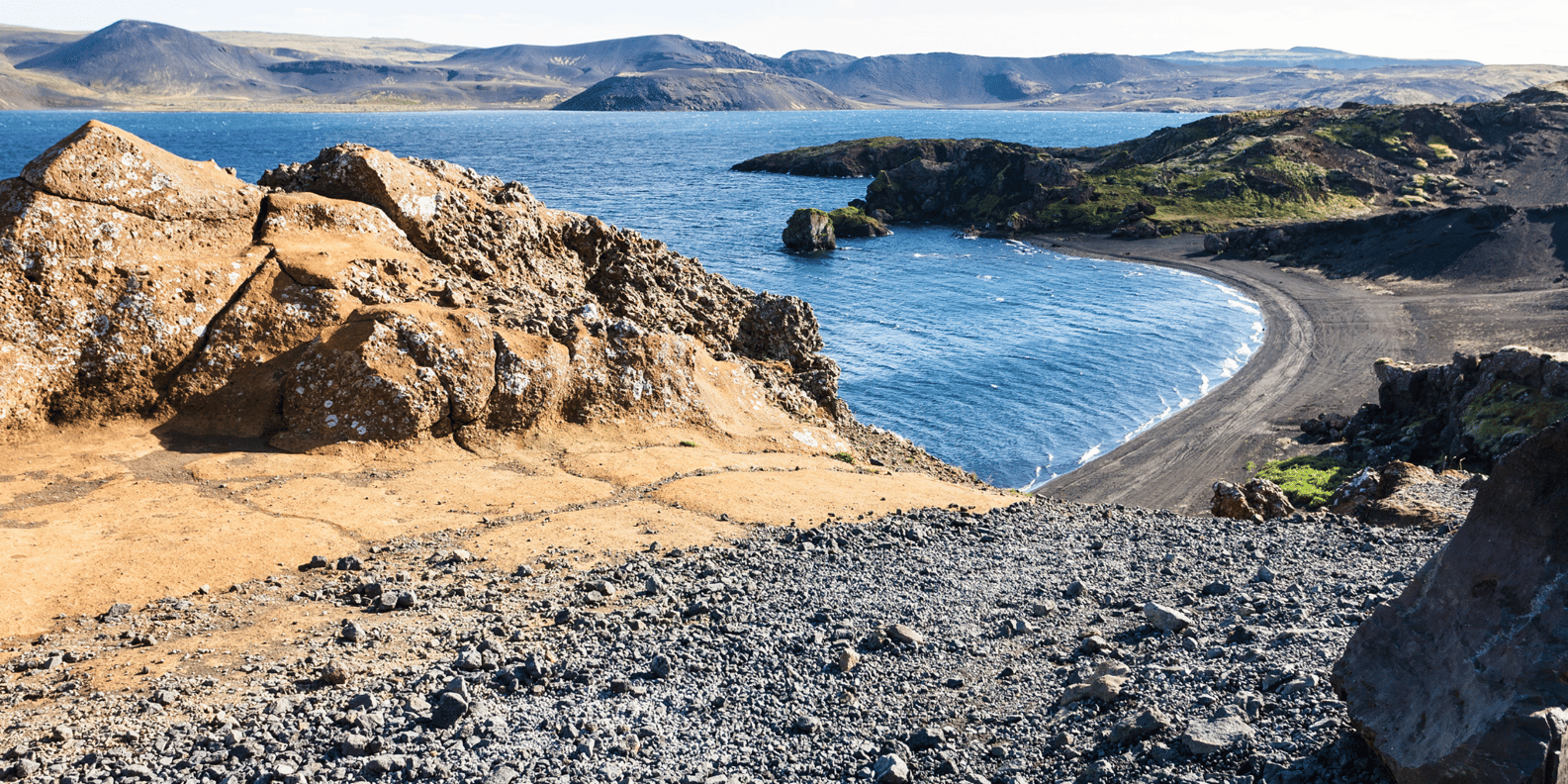
From Reykjavík, leave road 41 at Hafnarfjörður and take road 42 south. The road climbs into a bare volcanic landscape and then drops to Kleifarvatn, the largest lake on the Reykjanes Peninsula and up to about 90 metres deep. After the earthquakes of 2000 the lake began to shrink, and a significant part of its surface has since disappeared – the exposed black-sand shoreline is a striking sight. Stop at one of the lay-bys on the eastern shore.
2. Seltún geothermal area
A few minutes south, in the Krýsuvík area, Seltún is one of the most colourful geothermal fields near Reykjavík: hissing fumaroles, bubbling mud pots and hillsides streaked yellow, red and green by minerals. A boardwalk keeps you away from the scalding ground – stay on it; the crust beside geothermal vents can be thin. It smells strongly of sulphur, which is completely normal.
Midday: Grindavík
From Krýsuvík, continue to the coast and head west to Grindavík (or, if the south coast road is closed, return north to road 41 and approach via road 43). The fishing town has been open to visitors since October 2024 after its evacuation in 2023. Stay on marked streets, have lunch at one of the reopened restaurants, and look out for the edge of the 2024 lava that reached the northern side of town. A guided Grindavík walking tour is the best way to understand what happened.
Afternoon: the south-west coast
4. Brimketill
Leave Grindavík westwards on road 425 (Nesvegur). After about 10 km you reach the small car park for Brimketill. A short path and stairs lead to a viewing platform over the pool: a basin carved by the sea into lava from the Reykjanes fires of 1210–1240. On a swell day the waves fill it with white foam – the name means roughly “surf cauldron” – and on calm days you can look down into clear water. Stay on the platform and hold children by the hand; waves are unpredictable. Folklore calls it Oddnýjarlaug after a troll woman who bathed here – our legend page has the story.
5. Gunnuhver
A few kilometres further west, Gunnuhver is a high-temperature geothermal area with steaming mud pools and vents, named after Gunna, a ghost who – according to legend – was lured into the hot spring. Viewing platforms let you stand in the drifting steam. The area changes with geothermal activity, so follow the marked paths only.
6. Reykjanesviti lighthouse and Valahnúkur
Iceland’s first lighthouse was built here in 1878 on the sea cliff of Valahnúkur. Earthquakes and surf damaged it so badly that a new lighthouse, Reykjanesviti, was built on the hill of Bæjarfell in 1907–1908. Cracks have appeared in the Valahnúkur cliff since 2016 and access has been limited, so respect any signs and stay well back from the edge. On a clear day you can see the rock island of Eldey offshore.
7. Bridge Between Continents
Follow road 425 north along the west coast to Sandvík, where a footbridge spans a sandy rift that marks the boundary between the North American and Eurasian plates. It is symbolic – the plate boundary here is a broad zone, not a single crack – but it is a fun stop and a good illustration of why the peninsula is so volcanic. From here it is about 20 minutes to Keflavík Airport or about an hour to Reykjavík.
By late afternoon the light comes in low across the lava, turning the moss gold and the sea pewter. You stand in warm, sulphur-scented steam at Gunnuhver, then drive to the lighthouse and watch seabirds ride the wind beneath the cliffs. A private Reykjanes tour can follow the same coast at your own pace.
Evening options
- Blue Lagoon: about 15–20 minutes from Brimketill. If you plan to finish here, do the coast in reverse or skip the Bridge. See Blue Lagoon and Brimketill for tickets and timing.
- Northern lights: from September to April, the dark coast west of Grindavík is far from city lights. Our northern lights guide explains forecasts and where to stop safely.
Half-day version (4–5 hours)
Short on time, or arriving at Keflavík? Skip Kleifarvatn and Seltún and do the western loop only: airport → Bridge Between Continents → Reykjanesviti → Gunnuhver → Brimketill → Grindavík or Blue Lagoon, then return via road 43 and 41. This is the most efficient way to see Brimketill on an arrival or departure day; the layover guide explains the time buffers.
| Season | What changes |
|---|---|
| Summer (Jun–Aug) | Near-24-hour daylight – you can do the full loop slowly and still have an evening at the lagoon. |
| Autumn (Sep–Oct) | Good daylight, dramatic seas at Brimketill, start of the northern lights season. |
| Winter (Nov–Feb) | Daylight shrinks to about 4 hours around midwinter; cut to the half-day loop and keep the coast for midday. |
| Spring (Mar–May) | Lengthening days, mixed weather, roads can be icy early in the season. |
Prefer a guide?
If you don’t want to drive, several tours cover parts of this route. Private tours based in Reykjanesbær, or with pickup in Keflavík and Reykjavík, are the closest to a customised version of this itinerary. Group tours focusing on the rift and geothermal areas are a good alternative. Compare them in our Reykjanes tours guide.
Check the private Reykjanes Peninsula tour →
Frequently asked questions
How many days do you need on the Reykjanes Peninsula?
One full day covers the main sights comfortably. Add a second day if you want a guided volcano hike or an unhurried Blue Lagoon visit.
Can you drive around the Reykjanes Peninsula in one day?
Yes. A loop from Reykjavík via Kleifarvatn, Grindavík, the south-west coast and Keflavík takes about 7–9 hours including stops, depending on road conditions.
What is the best order to visit the Reykjanes sights?
Start at Kleifarvatn and Seltún in the morning, reach the south-west coast and Brimketill in good afternoon light, and finish at the Bridge Between Continents or the Blue Lagoon.
Are the Reykjanes sights free?
Brimketill and most of the natural sights on the route have no entrance fee. Some Icelandic car parks charge a parking fee, so look for payment signs; the Blue Lagoon and guided tours are paid.
Is the Reykjanes Peninsula worth it compared with the Golden Circle?
It is shorter, quieter and closer to the airport, with lava fields, geothermal areas and wild coast rather than waterfalls and geysers. Many travellers do both on separate days.